26.11.2025, 01:00–01:45 o'clock (Europe/Berlin), Stage One
Open for Germany – OERcamp cOERrespondents from around the wOERld
This talk provides a brief overview of the current status and debates surrounding OER in Germany, with a slight focus on higher education and the cross-educational fields of action.
The speakers will introduce the cross-state cooperation network for OER-supporting infrastructures and services (KNOER) with its currently ten member institutions and thematic working groups.
After a short introduction, Konrad Faber and Noreen Krause invite participants to engage in a dialogue-oriented discussion on current issues relating to OER, such as:
- How can OER be more closely linked to or integrated in Open Science?
- How can open education (resources) be anchored in everyday education and curricula, and what are the characteristics of open didactic scenarios?
- What are the pain points of OER use in Germany?
- How can the path to interoperability and an OER ecosystem be pursued (based on ten theses)?
Hier geht es zur Aufzeichnung: https://youtu.be/Ql4hgztuMJ0?si=guZQZfIBT2KhiDjy

Frank is a second-generation NOERd — he joined the game when it was already in full swing. On the one hand, he regrets that a bit, since he’s only now getting to know so many great people and past projects. On the other hand, he feels that this sometimes allows him to look at OER and OEP from a slightly different “lens.”
Beyond the big topic of openness, Frank can hardly rein in his curiosity about anything related to learning and teaching. That might have something to do with the fact that he once studied (vocational) pedagogy — but then again, maybe not.
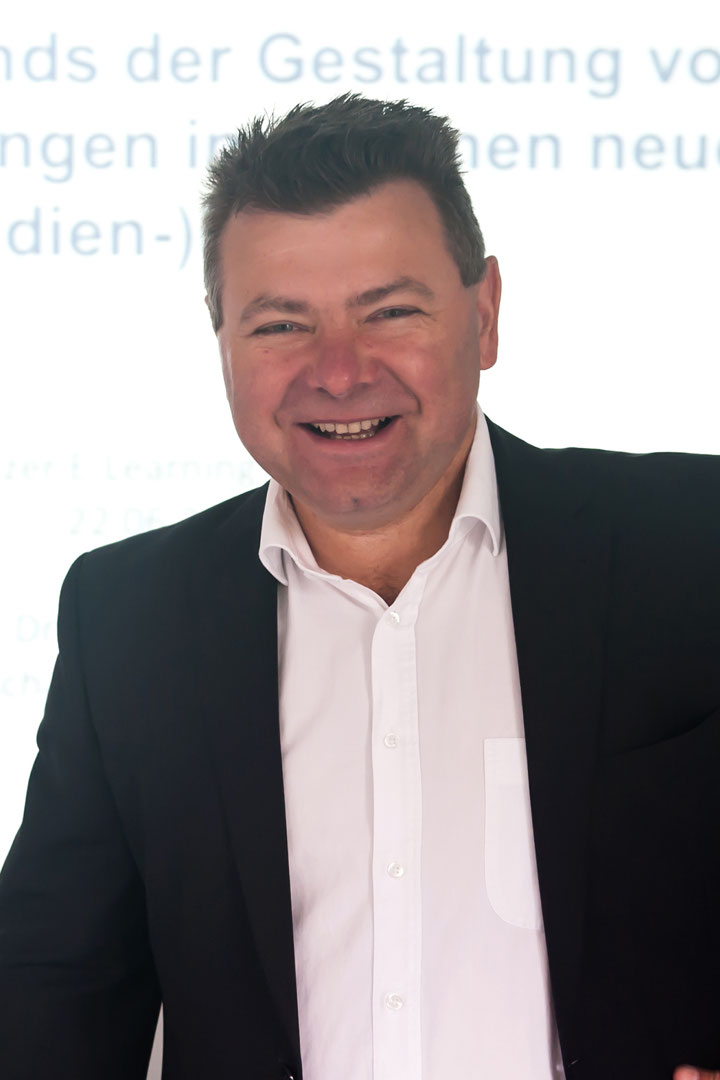
Konrad Faber is managing director of the Virtual Campus Rhineland-Palatinate (VCRP) and honorary professor for social competencies at the University of Applied Sciences Kaiserslautern. He is currently also co-chair of the cross-state cooperation network OER (KN-OER.de), a member of the Rhineland-Palatinate Digital Council and the advisory board for the OER strategy of the Federal Ministry of Education and Research. He studied management and technology as well as adult education. He received his doctorate from the Department of Social Sciences at the Technical University of Kaiserslautern with a thesis on organisation and innovation in education. He is a consultant for online and distance learning and author of books, teaching materials and specialist articles on the topics of education, human resources and quality management, and e-learning. Prof. Dr. Faber has consulting experience in industry, public administration and higher education. Further information is available at https://www.konradfaber.de.
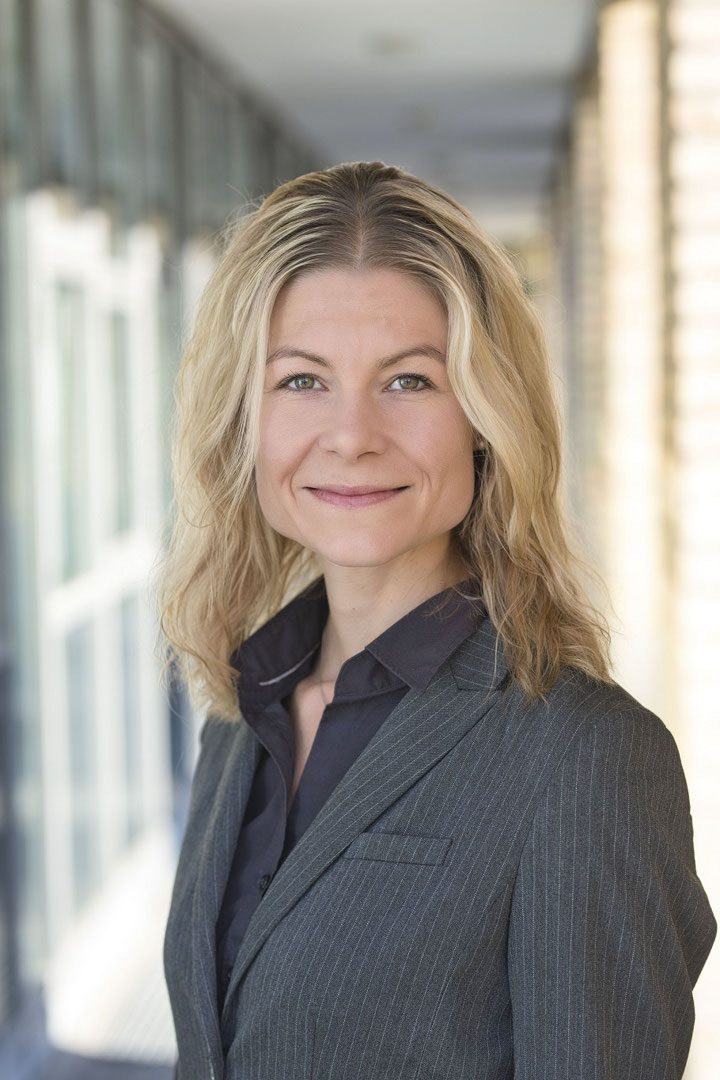
Noreen Krause is active at the TIB – Leibniz Information Centre for Science and Technology in Hanover, serving as the head of the initiative twillo (https://www.twillo.de/en/), located in Lower Saxony. twillo is the central portal for Open Educational Resources (OER) in higher education, providing technical infrastructure beyond the region (twilloHub) and acting as a competence center and hub of expertise that offers comprehensive support, including training and workshops.
She is a member of the advisory board of the Federal Ministry of Education, Family, Seniors, Women and Youth (formerly the Federal Ministry of Education and Research) for the OER strategy in Germany. Since 2022 Noreen Krause is a member of the international advisory board for OER certification for Austrian universities, currently as co-chair. In addition, she is active in the Cooperation Network OER Supporting Infrastructures and Services (KN-OER), the Alliance for Free Education, the Network of State Institutions for Digital Higher Education, the cross-state working group of OER repositories and OER referatories in higher education established in the DACH region (Germany, Austria, Switzerland) and the European Network of Open Education Librarians (ENOEL) by SPARC Europe.