25.11.2025, 22:00–22:45 o'clock (Europe/Berlin), Blue Room
This session examines how open education can resist techno-fascist tendencies embedded in digital infrastructures and higher education. As AI systems, learning-management-platforms, and data-driven governance expand, subtle authoritarian logics reshape educational standards, decision-making, and pedagogical autonomy under the banner of efficiency.
The objectives of the session are thus (1) to make these logics visible for teachers, students and policy makers, (2) to reframe openness as infrastructural and ideological practice, and (3) to co-design concrete institutional and pedagogical countermeasures. Methods combine a short opening input on techno-fascism (general and higher-ed specific) with a shared mini-glossary, collaborative mapping of risks and responses on an open Etherpad, focused small-group discussion (policy, infrastructure, pedagogy), and a final convergence to prioritize three to five actions. Drawing on research in techno-fascism, cyberlibertarianism, and the political economy of EdTech, the session fosters transparent, participatory, community-led alternatives.
Advanced
Additional information –Markus Deimann (PD Dr.) is an educational scientist with long-standing experience in Open Education and CEO of ORCA.nrw, the open-education center serving 36 public universities in North Rhine-Westphalia.
Language of the session –English
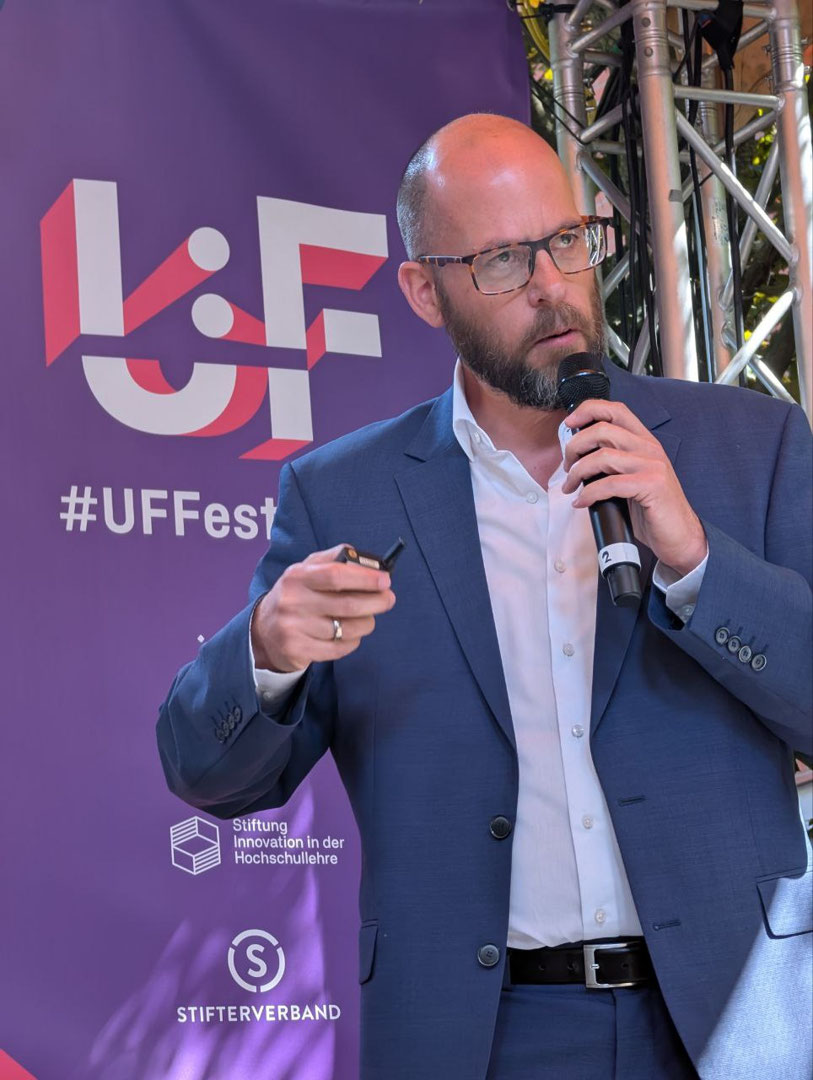
My name is Markus Deimann, and I lead the state-wide OER infrastructure ORCA.nrw in North Rhine-Westphalia, Germany. My work focuses on building open, interoperable systems for higher education — and critically reflecting on how digital infrastructures shape educational practices and public values.